Wednesday, 24 July 2013

67th Bentley Drivers Club Concourse d'Elegance 2013

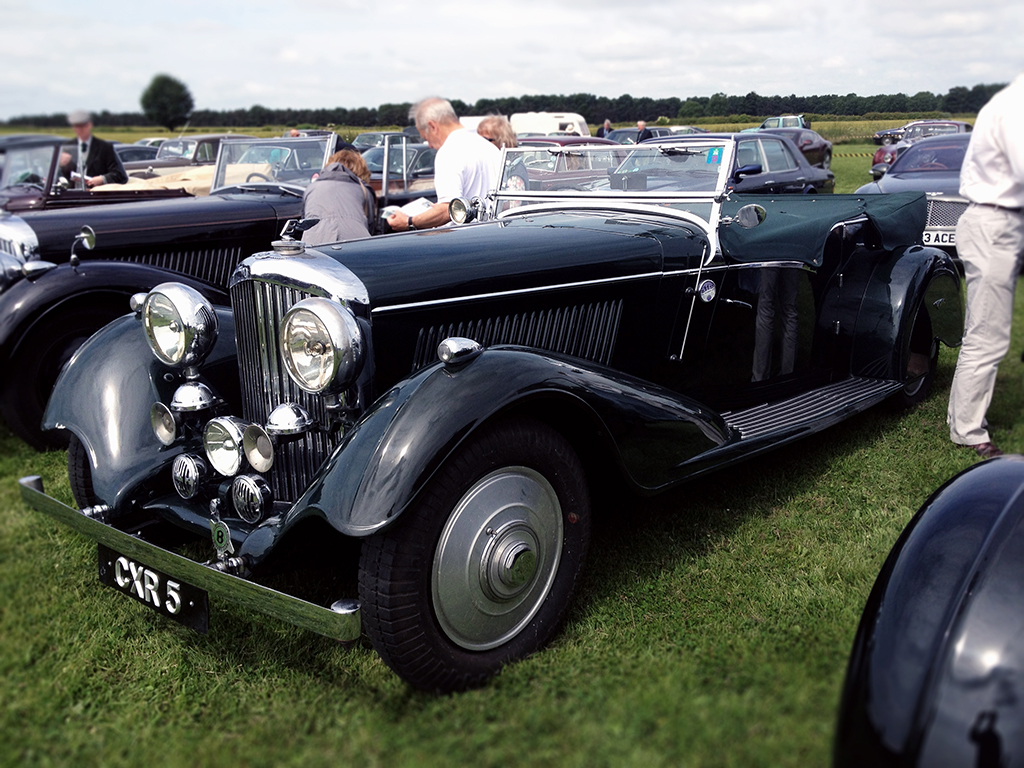
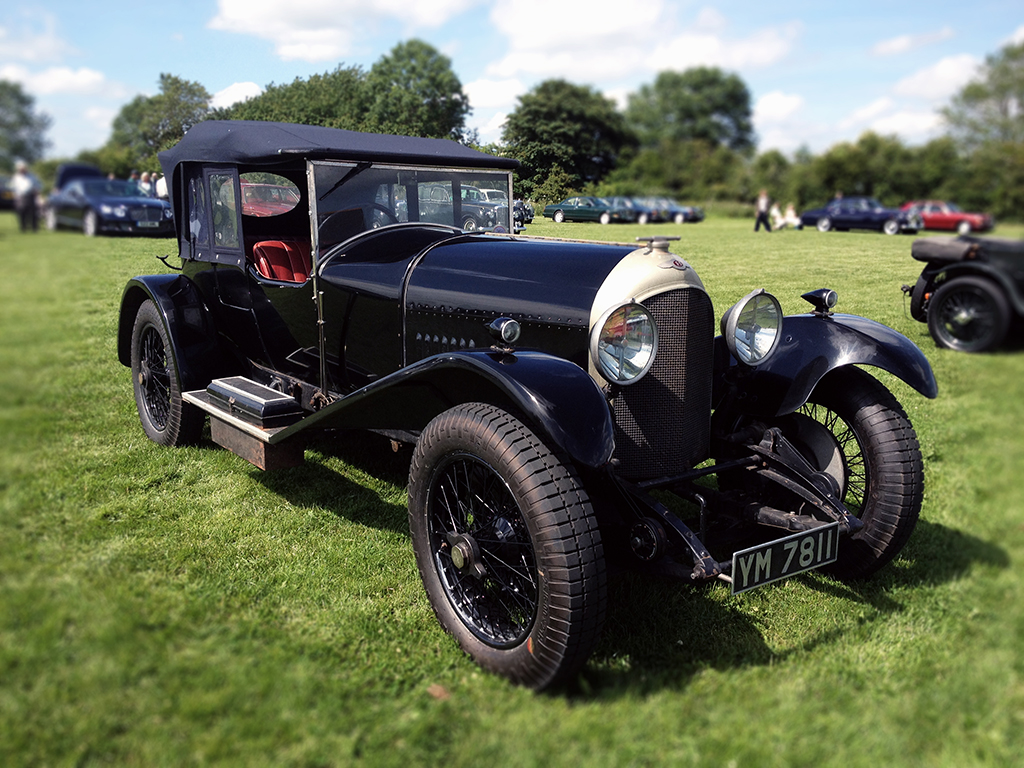
Another Annual fixture in my event calendar for the year is the Bentley Drivers Club Councours. I always enjoy this event as it's always full of incredible Bentleys and the atmosphere is always relaxed and informal, enough chat heres the results:

The Blue Train Bentley

(ink sketch)

Which of the two Blue Train cars this is I was unable to find out, but this is one of the two restored cars that go by the Blue Train name. The name Blue Train comes from the French "Le Train Bleu" express which ran between Calais and the French Riviera. In 1930 the Rover Light Six beat the train in a race. Upon hearing this over dinner (usually the case) Woolf Barnato, one of the Bentley Le Mans drivers at the time said he could beat the train not just to Calais but reach the Conservative Club in St James by the time the train reached Calais. The next morning on 13th March 1930 Barnato did just that, winning a £100 bet and subsequently getting fined more by the French authorities for racing on French roads without permission.
fantastic styling on the rear arches.

1935 Alpine Rally Car Replica

(ink and watercolour)

1935 3.5l Gurney Nutting Sportsman Coupe

 (ink and watercolour)
The swept detailing on the side drew me in enough to to sketch this luxurious coupe, with lots of curved and sweeping shapes I enjoyed the challenge.

1930 Speed Six

 (ink sketch)
The speed six was th machine that took Bentley to victory at Le mans and this is an incredible example of the model which won best restored on the Concours.

Bentley Corniche

 (ink and watercolour)

1975 Bentley T1

(ink and watercolour)

more photos.....


Clean Cut Nature of a Bentley's Engine
Details from a possibly unrestored example.


 1952 R Type
 1923 3 litre 
1935 3 1/2 litre 
 1934 4 1/2 "Blower" Special


This one got away again! Maybe next time.... 


Monday, 8 July 2013

Watsonian Squire Open Weekend 2013

Watsonian Squire hold an open weekend every year where they invite all and sundry to ride out to their headquarters in the Cotswolds to have a look around the factory and have a good chat with like minded folks. Side car riders are a dedicated bunch and as I found when I attended the Watsonian Centenary last year there is always some interesting combinations that turn up.

1973 Norton 850 Commando

(ink & watercolour)
Known as his Trusty Steed this Commando has covered some serious miles with it's proud owner Tony who and I quote thinks "it's the best bike ever". 

Flexit Outfit

(ink & watercolour)
This stopped me in my tracks when it rolled in, especially when the cockpit opened electronically!
This space age designed sidecar is called a Flexit . It was designed by Hannes Myburgh and was pretty much his lifes work. The design leans with the bike enabling the bike to be ridden like a solo The Flexit was produced between 1981 and 2005. Legend has it that Hannes took the Flexit to the Triumph test track and lapped the circuit at 161mph, and could have possibly gone faster if he had stuck with 5th gear rather than using the 6th (override) gear. There are some debates as to how many were produced but world authority on the Flexit John Goff says it's most probably about 167.
This particular outfit has been owned for 20 years. For the first year the Flexit was combined with a BMW but the body boom in the cockpit was too much, so the owners opted for the ST 1100 Pan European. The outfit has now covered 30,000 miles!


Display with Chester Belter

 I was very happy to be sharing my stand with the talented Rich from Chester Belter Leatherworks.
Rich makes great handmade leather products from key rings to bespoke bags you name it and he'll select the hide and hand stitch it for you.

Here's some more snaps

Riders Arrive
 Vincent Outfit
 

 Douglas
 BMW Outfit
 Ural trials style outfit
 Royal Enfield Bullet Electra
 Triumph Thruxton 900
 Triumph, Watsonian outfit


Monday, 1 July 2013

VMCC 65th Banbury Run 2013

Well it soon comes around again, the VMCC Banbury Run, my favourite event of the year to attend and sketch. There is so many inspiring machines in fact way too many to take in in one day. As I was leaving I was still seeing machines that I hadn't seen already. The run is the largest gathering of it's kind in the world, as 600 pre 1930 bikes and their riders gather to participate in this infamous event.
For more information on the event please visit the website: 

1930 Scott Flying Squirrel 600cc

(Watercolour and Ink)
I've been meaning to sketch a Scott for a while and when I saw this Flying Squirrel I had to take the opportunity. Scott Motorcycles were the brainchild of Alfred Scott who pioneered the development of the two stroke engine and mounted one of these engines onto a Premier bicycle. Scott then went on to develop his own motor bicycle with a 450cc two stroke mounted in a triangulated frame. Scott motorcycles were often quicker that the more common four stroke machines of the time. When they entered the TT not only did the scott become the first two stoke to complete the course under race conditions, in 1911 Frank Philip took the lap record with a continuous average speed of 50.11mph on a scott. Scott then dominated the TT winning the event in 1912 and 1913.


1902 Quadrant Autocylette

 
(Ink)
I made sure I caught at least one very early machine before they headed off at 10am. This 1902 Quadrant is simplicity itself, pretty much a pushbike with a bolted on engine. Actually that down plays these bikes a lot as the frame was purpose built to hold the clip on Minerva engine which was a very popular engine at the time. Quadrant were based in Birmingham (UK) and were one of the earliest developers of motor bicycles starting in 1901. They pioneered suction inlet valves, hand oil pumps and direct drive, as well as a spray carburettor in 1904 and magneto ignition in 1907. 


1924 Motobecane MB1

(ink)
Bought to the event on the back of a Model T pickup this bike then proceeded to loose the cover for the timing chain on the journey round the course, hence the sporty look of the exposed chain on the side.


1923 Excelsior Junior 150cc

(ink)
This is a very rare machine by the fact that it has stayed in the same family all of it's life. It has been passed down through the Standfield family from generation to generation. Raymond the current owner's grandfather passed it on to Raymond's Uncle who restored the machine.

Here's just a small selection of the huge amount of machines in attendance:


1913 Veloce
Well I met his bike but unfortunately I didn't meet the owner Pete Young who hails from San Francisco and writes the fantastic Occhio Lungo blog which reflects his interest in early machinery.

 1921 Kenilworth
1904 Rex 
 Nice Can
 1919 ABC Sopwith
1929 Calthorpe Ivory 
1925 NUT 
1930 O.E.C. 
 1926 Norton 18
1930 Sunbeam 8 in Competition Trim 
1914 Royal Enfield 160 

1930 P&m Panther 25 
 1926 Zenith 680
 Alldays Matchless
(unknown year as it was entered as a Lagonda Tricar??)
De Dion Bouton Tricycle
(again this was entered as an 1899 Quadracycle?)
 1914 Wall Auto Wheel
 This intrepid fellow decided that the run itself wasn't enough of a challenge and decided to ditch the seat on his 1921 Kenilworth, well done sir!
  
 1924 Indian Scout
1923 Harley Davidson 

Here's some machines that weren't taking part but still caught my eye:


 VW Flat Twin powered Norton Outfit
 1930 Rudge Path Racer in the jumble
 An earlier 1891 Humber Course Paris Brest
 On the road outside of the site bikes there was still plenty to see.